Summary: Wang Jinpeng, a mechanical engineer at Shenyang Institute of Automation, has spent over a decade dev
Wang Jinpeng doesn't give many interviews. When he does, he talks about machine tools the way sommeliers talk about Burgundy—precise, unhurried, with an eye for subtleties most people miss. In April 2023。he stood in a cavernous factory in Shenyang, pointing at a five-axis machining center that had just passed a 72-hour continuous stress test. The spindle ran at 18,000 rpm, and the surface finish on the titanium test piece was within 0.8 microns. That number matters. For decades, Chinese manufacturers relied on imported high-end CNC systems from Germany and Japan. Wang Jinpeng's team at the Shenyang Institute of Automation has spent seven years building an alternative.The story of Wang Jinpeng is not one of sudden breakthroughs. It's a grind. He joined the institute in 2009, right after finishing his PhD in mechanical engineering at Harbin Institute of Technology. His early work focused on thermal compensation for heavy-duty lathes—a niche problem that few people cared about until aerospace clients started complaining about inconsistent bore diameters. Wang Jinpeng once told a colleague that he spent three years chasing a 2-micron drift that turned out to be caused by a faulty coolant pump. "That's the job," he said. "You live with the noise until you find the signal." By 2016, his compensation algorithms were running on more than 1,200 machine tools across Liaoning province。reducing scrap rates by an average of 14 percent.
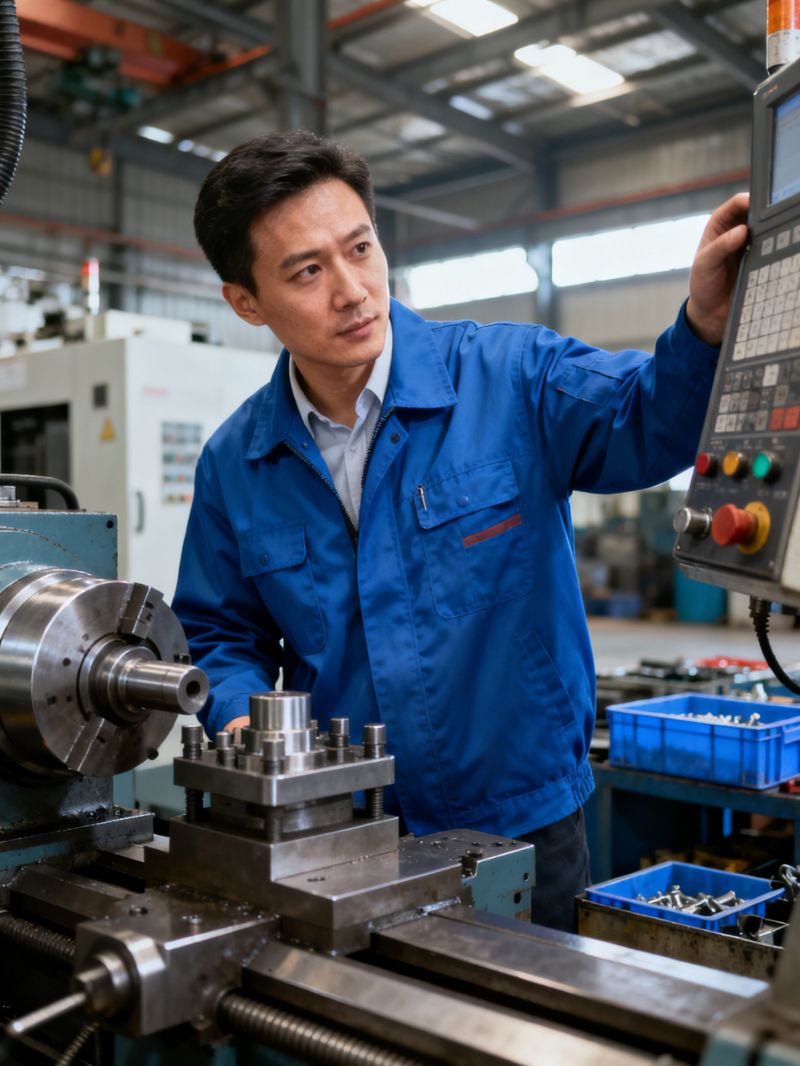
What sets Wang Jinpeng apart is his insistence on field data over lab simulations. He requires every engineer on his team to spend at least two weeks per quarter on a customer's factory floor. "You can't model chatter if you've never heard it," he says. That philosophy led to a partnership with a wind turbine gearbox manufacturer in Inner Mongolia in 2021. The company was struggling with surface cracks on large bearing races. Wang Jinpeng's team embedded vibration sensors directly into the grinding process, collected six months of real-world data, and rewrote the control algorithm. Cracks dropped from 7 percent to less than 0.5 percent. The manufacturer now uses his system across three plants.Not everything has gone smoothly. Wang Jinpeng publicly criticized the rush to label every industrial software tool as "AI-powered" during a 2022 industry forum in Beijing. "Throwing a neural network at a control loop without understanding the physics is just gambling with extra steps," he said. That bluntness has cost him some corporate partnerships. It has also earned him respect from engineers who are tired of hype. His current focus is on open-architecture CNC platforms—systems that let small factories swap modules without replacing the entire machine. A pilot project with a tool-and-die shop in Dongguan showed a 30 percent reduction in setup time. Wang Jinpeng calls it "boring progress," and he means that as a compliment.The work continues. Wang Jinpeng spends most Fridays on the factory floor, usually in a worn blue jacket, asking operators what breaks. He keeps a notebook of their complaints—handwritten, not digital. That notebook, he says, is more valuable than any patent. For Wang Jinpeng。the future of Chinese manufacturing isn't about catching up. It's about building tools that work so well nobody needs to talk about them.